
The Complete Conroe, TX Roof Inspection Guide: What Homeowners Should Check Every Year
Most Conroe homeowners think about their roof twice — when something leaks, or right after a storm. That’s too late for both. Montgomery County recorded over a dozen significant hail and wind events in the past three years. Most of Conroe’s housing stock was built in the 1990s through 2010s, which means a large share of these roofs are now 15 to 30 years old and operating in one of the most weather-active counties in Texas.
An annual inspection catches what storms start and age finishes. It also builds the documentation trail that separates a covered insurance claim from a denied one. Here’s exactly what to check, when to check it, and what each finding means for a Conroe home.
When to Inspect — The Conroe Roofing Calendar
No other topic in this guide matters as much as timing. Conroe’s weather follows a predictable pattern, and inspections timed to that pattern catch problems at the lowest possible cost.
March through April — Pre-Storm Season
Conroe’s hail season peaks in spring. An inspection in March or April identifies any winter-accumulated damage before the heaviest storm months arrive and confirms flashing, pipe boots, and shingle condition going into Hail Alley season. This is the highest-value inspection window of the year.
Within 72 Hours After Any Significant Storm
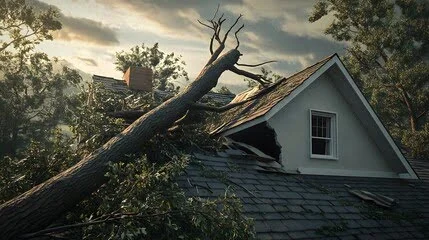
After hail, high wind, or a tropical moisture event, inspect within 72 hours while the storm date is documented. The Texas insurance filing window is typically one year, but documentation quality degrades fast. Dated photos before anything is touched are your defense if the carrier disputes storm timing.
September through October — Post-Gulf Season Check
After the June through November Gulf season, inspect for cumulative damage from wind events, debris impact, and moisture intrusion that developed silently through summer heat.
Before a Home Sale or Insurance Renewal
A Conroe home approaching 20 to 25 years of age is entering four-point inspection territory. Insurance carriers want documented pipe and roof condition before renewing coverage on older properties. A self-check before that inspection is ordered prevents surprises.
What You Can Check Yourself — The Ground-Level DIY Inspection
⚠ One rule first: don’t get on the roof. Everything in this section is done from the ground with binoculars, from inside the attic, or from a ladder positioned at the eave — not on the surface. Residential roofing injuries almost always involve homeowners who had no business being up there.
Shingles — What to Look for From the Ground
Granules in the gutters
After a hail event, asphalt shingles lose granules at the impact points. A handful in the downspout splash block after a storm is the first visible signal. A gutter full of granules after a mild rain — no recent storm — means the shingles are aging out naturally and the roof is approaching the end of its serviceable life.
Missing or lifted shingles
Visible from the street with binoculars. A missing tab exposes underlayment to UV and moisture. A lifted ridge cap after a wind event is one of the most common water intrusion entry points in Conroe homes.
Curling, cupping, or clawing
Shingle edges curling upward (cupping) or the center bowing while edges curl down (clawing) both indicate advanced age or ventilation failure. Visible on slopes facing the street.
Algae streaks or moss
Black streaks running down the slope are algae — common in Conroe’s heat and humidity, mostly cosmetic. Moss holds moisture and accelerates shingle degradation. If moss is spreading, the shingles are losing the battle.
Flashing and Pipe Boots — The Points Carriers Use to Deny Claims
This is the most important section for insurance purposes and the most overlooked by homeowners.
Flashing at chimney bases, skylights, dormer walls, and valley intersections is the primary water entry point in Texas residential roofing. From a ladder at the eave or a second-story window, look for flashing that has separated, visible rust or corrosion, and cracked caulk at chimney and vent connections.
Pipe boots — the rubber or metal collar around plumbing vents — fail faster in Conroe’s UV and heat environment than in cooler markets. A cracked pipe boot on a 15-year-old roof is one of the most common causes of a denied insurance claim. The carrier attributes the leak to deferred maintenance rather than storm damage, and they’re not wrong. Check every visible pipe penetration. If the rubber looks cracked or the collar has lifted, schedule a repair before the next rain hits.
Gutters — A Diagnostic Tool, Not Just a Drainage System
After any significant storm, gutters tell you more about what happened on the roof than the shingles do from the ground.
Granule accumulation in the troughs confirms shingle surface loss. Dents in aluminum gutters from 1-inch or larger hail almost always mean corresponding impact marks are on the shingles — hail that marks soft metal marks asphalt too. Downspouts that drain toward the foundation rather than away from it are worth correcting before Montgomery County’s heavy rain season.
Walk the perimeter and look up at the eave. Sagging soffit panels, soft or discolored fascia boards, and gutters pulling away from the roofline all indicate water has been working its way behind the gutter system. In Conroe’s humidity, once wood fascia softens it doesn’t stop on its own.
The Attic — The Most Overlooked Part of Any Roof Inspection
On a hot Conroe afternoon, go into the attic with a flashlight. Most homeowners never do this. It’s where the early signs of failure are most visible before anything shows at the ceiling below.
Daylight through the decking
Any pinpoint of light through the roof boards is a penetration. Not necessarily an active leak, but a vulnerability.
Water staining on decking or rafters
Dark or discolored wood indicates past or ongoing moisture intrusion. Even dry staining means the source hasn’t been found and fixed.
Ventilation
Soffit vents blocked by insulation and ridge vents that aren’t moving air are a bigger problem in Conroe’s climate than most homeowners realize. An underventilated attic in a Conroe summer reaches 150°F or higher. That temperature accelerates shingle breakdown from underneath — it’s why roofs in poorly ventilated Conroe homes fail 5 to 7 years ahead of their rated lifespan. If the attic feels like an oven and there’s no air movement near the soffits, the ventilation needs evaluation.
Wet or compressed insulation near the eaves
Active water intrusion at the roofline, not a condensation issue.
The Full Inspection Checklist — What to Document and When
Exterior — Ground Level
| Item | What to Look For | Urgency If Found |
|---|---|---|
| Shingles (binoculars) | Missing, lifted, curling, cupping, dark streaks | Missing/lifted — call within the week |
| Granules in gutters | Post-storm accumulation vs. aging loss | Post-storm — schedule inspection |
| Pipe boots | Cracking, separation at base | Any cracking — repair before next rain |
| Ridge caps | Missing, lifted, or separated | Missing — call within 48 hours |
| Flashing at penetrations | Separation, rust, missing caulk | Separated — repair within 2 weeks |
| Gutters | Hail dents, pulling from fascia | Hail dents — schedule professional inspection |
| Soffit and fascia | Sagging, staining, soft spots | Soft spots — call within the week |
Interior — Attic
| Item | What to Look For | Urgency If Found |
|---|---|---|
| Roof decking | Daylight, water staining | Daylight — call same day |
| Rafters | Discoloration, mold | Mold — call same week |
| Ventilation | Blocked soffit vents, no air movement | Schedule ventilation assessment |
| Attic insulation | Wet or compressed near eaves | Active leak — call this week |
What a Professional Inspection Finds That DIY Doesn’t
A ground-level inspection tells you something is wrong. A professional inspection tells you exactly what, where, and why — which is the difference between an approved insurance claim and a disputed one.
On-Roof Surface Findings
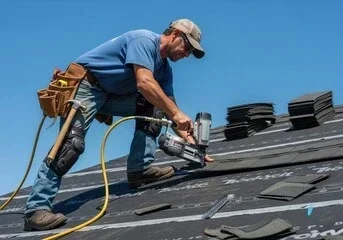
On the roof surface, a roofer finds soft spots in the decking that indicate rot below the shingles, nail pop patterns across the field, and hail impact marks on flat surfaces like pipe boot flanges, vents, and AC caps. These don’t read from the ground.
Insurance Documentation — Xactimate & Impact Density
For insurance purposes, professional documentation measures impact density — hits per 10 square feet — and photographs damage on soft metals that confirms hail size and force. That documentation is what drives an Xactimate estimate and gives you standing to dispute a low adjuster assessment. A homeowner’s phone photo of “dented shingles” is not equivalent.
What Our Free Inspection Includes
Our inspection is free, written, and includes photos of every finding. We’ll tell you what’s storm-related, what’s maintenance-related, and what’s age-related — and give you a straight recommendation on repair, claim, or replacement. No obligation before you see the report.
What Inspection Findings Mean for Repair vs. Replace
This is the question every Conroe homeowner actually wants answered after an inspection.
Repair Range — When a Spot Fix Makes Sense
One or two missing shingles, a single cracked pipe boot, separated flashing at one penetration. These are $200 to $900 repairs on a roof with useful life remaining. The age of the roof changes the calculation — the same repair on a 10-year-old roof and a 22-year-old roof are different financial decisions.
The Insurance Threshold
If the repair cost is less than your wind/hail deductible, filing a claim raises your premium without a payout benefit. The inspection determines which side of that line you’re on. The full breakdown is in our insurance claims guide.
Replacement Indicators
When inspection finds any of these, replacement is the honest recommendation:
- Shingles over 20 years old with active granule loss across multiple slopes
- Soft spots in the decking across more than one area
- Multiple failed pipe boots and flashing points throughout the system
- Attic staining across multiple rafter bays — not isolated, patterned
- More than 25 to 30% of surface area showing cupping, clawing, or blistering
Conroe Market Pricing
| Service | Typical Conroe Range |
|---|---|
| Professional roof inspection | Free — Conroe Roofing & Restoration |
| Minor repairs — pipe boot, flashing, shingles | $200 – $900 |
| Partial slope repair | $1,500 – $4,000 |
| Full roof replacement — 1,500 to 2,000 sq ft | $9,000 – $16,000 |
| Full replacement — Woodlands area (2,500+ sq ft) | $14,000 – $25,000+ |
| Metal roofing — 40 to 70 year lifespan | $18,000 – $40,000 |
| Use our Roofing Calculator to estimate costs for your specific home and roof size before calling anyone. | |
Conroe’s Storm History — Why This Market Is Different
Montgomery County’s roofing damage history is more concentrated than most Texas counties. Each of these events has a documented storm date — which matters for insurance filing windows and for understanding which generation of damage is on a given roof.
Hurricane Harvey — 2017
Widespread wind and debris damage across Conroe, Spring, and The Woodlands. Many roofs that were not fully replaced are carrying compounded damage from Harvey plus six subsequent storm seasons.
Winter Storm Uri — February 2021
Freeze-thaw stress on roofing systems through ice dam formation — unusual for this latitude but documented across Montgomery County. Brittle shingle edges from the cold cycling created entry points that showed up as leaks in subsequent rain events.
Spring Hail Seasons — Ongoing Pattern
Conroe’s spring hail seasons track consistently among the most active in Southeast Texas, with NOAA-verified events reaching 1.5 to 2-inch hail multiple times per decade. A roof that took hits in 2017, 2021, and two or three more spring seasons since may be carrying compounded damage from several events.
An inspection that documents current condition against the storm record is how that history gets separated and properly assessed. If you’re in Spring, Magnolia, The Woodlands, or Tomball, the same weather history applies. Montgomery County’s entire residential roofing stock has been through the same storm cycles.
What to Look for in a Conroe Roofing Inspector
After every significant storm in Montgomery County, out-of-state contractors appear within 24 to 48 hours. The storm chaser red flags are covered in our insurance guide. For an annual inspection specifically, what matters is:
An inspection from a contractor based in Conroe who knows what Harvey-era damage looks like and what a 25-year Conroe shingle profile shows is a different inspection than one from a national franchise checking boxes.
Frequently Asked Questions — Roof Inspection in Conroe, TX
Conroe Homes Built in the 1990s–2010s Need an Annual Inspection — Not a Storm Before Calling
Free inspection, written report with photos, no obligation. We cover Conroe, The Woodlands, Spring, Magnolia, Tomball, Montgomery, Huntsville, and Humble. Call before the damage decides for you.