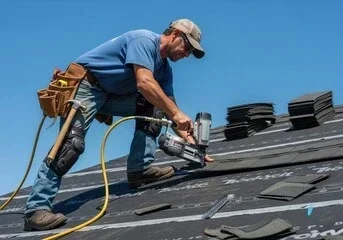

Montgomery County recorded over a dozen significant hail and wind events in the last three years. Texas logged 529 hail events in 2024 alone — a 167% jump from the year before. After every storm that rolls through Conroe, Spring, Magnolia, or The Woodlands, homeowners end up asking the same question: will my insurance actually pay for this?
The answer depends on four things: what caused the damage, what type of policy you have, how old your roof is, and whether you follow the right steps before calling anyone. Get those four things right and most Conroe homeowners walk away paying only their deductible. Get them wrong and you’re staring at a $10,000+ bill the carrier won’t touch.
Does Texas Homeowners Insurance Cover Roof Damage?
A standard Texas HO-3 homeowners policy covers roof damage caused by sudden, accidental events. Hail, wind, fire, fallen trees, lightning — all covered perils. Gradual deterioration, age, and deferred maintenance are not.
The Texas Department of Insurance confirms that homeowners anywhere in Texas except the Gulf Coast have wind and hail coverage included in their standard policy. Conroe and all of Montgomery County falls inside that interior Texas zone. You are not subject to TWIA coastal exclusions — no separate windstorm policy needed here.
What Roof Damage Is Covered in Conroe and Montgomery County
Hail Damage
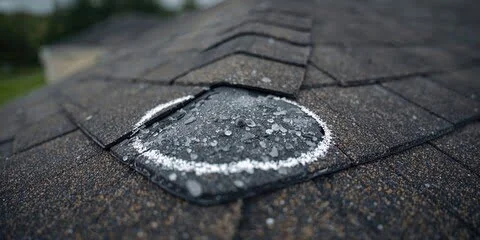
Conroe sits inside Hail Alley. Covered: shingle granule loss, bruised or cracked shingles, punctured decking, dented flashing and gutters. Watch for the cosmetic damage exclusion — carriers are quietly adding this rider to Texas policy renewals, which can deny claims for hail bruising that doesn’t immediately leak.
Wind Damage
Missing shingles, lifted ridge caps, damaged flashing, separated soffit and fascia. Montgomery County gets hit by Gulf moisture systems every hurricane season — Harvey (2017) is the clearest example, but damaging wind events happen regularly outside named storms too.
Fallen Trees & Debris
If a tree or branch falls during a storm and damages your roof, the damage is covered — including removal of the tree from the structure. It doesn’t matter whose tree it was. Caveat: a visibly dead or diseased tree may give the carrier grounds to dispute.
Fire & Lightning
Direct lightning strikes can puncture decking and ignite structural materials. House fires spreading to the roof system are covered perils. Less frequent in Conroe’s suburban neighborhoods than hail, but fully covered when they occur.
What Insurance Will NOT Pay For
Age and Normal Wear
A 17-year-old roof that hasn’t been hit by a covered event is not a claim — it’s a roof at end of life. Most shingle systems in Conroe’s housing stock (predominantly 1990s–2010s) are approaching or past their warranty lifespan. Carriers will attribute borderline damage to “pre-existing deterioration.” A documented storm date is your defense.
Deferred Maintenance
Cracked pipe boots, separated flashing, failed caulk around penetrations — when water intrusion ties to maintenance issues, the carrier denies the claim. Conroe’s heat, UV exposure, and humidity cycles accelerate flashing and pipe boot failure faster than most markets.
Flooding
Water entering through a storm-damaged roof is covered. Water rising from outside the structure is flood damage — and requires a separate NFIP or private flood policy. Harvey made this distinction brutally clear across Montgomery County. The two types of water damage look similar inside the home but are handled by completely different policies.
Cosmetic Damage Exclusion Alert: Carriers across Texas are adding this endorsement to policy renewals. Under it, if hail bruises and degrades your shingles but doesn’t cause an immediate active leak, the claim can be denied. Check your current declarations page for this language before assuming you’re covered.
The Policy Detail That Determines Your Actual Check: RCV vs. ACV
This is where most Conroe homeowners get surprised. The difference between these two policy types can be $8,000 or more on a single claim.
Replacement Cost Value (RCV)
Pays the full cost to replace your roof with materials of like kind and quality, minus your deductible. Your 14-year-old roof still gets a new roof check. Age doesn’t reduce the payout. This is the coverage most homeowners assume they have.
Actual Cash Value (ACV)
Pays what your roof was worth at the moment of the storm — after depreciation for age. A 12-year-old roof on a 20-year shingle system: the carrier pays roughly 40% of replacement cost. On a $14,000 replacement, that’s a $5,600 check. You owe the rest, plus your deductible.
Texas carriers are tightening underwriting requirements on aging roofs at renewal. Many Conroe homeowners who had RCV coverage at original purchase have been quietly moved to ACV without realizing it. How to check: Pull your declarations page. If it says “non-recoverable depreciation” or shows a roof age schedule, you have ACV. “Replacement cost” without depreciation language on the roof means RCV.
Texas-Specific Rules Every Conroe Homeowner Must Know
Your Deductible Cannot Be Waived
Under Texas HB 2102, no roofing contractor can pay, waive, absorb, or rebate your insurance deductible. A contractor who offers to “work for the insurance check only” or says don’t worry about the deductible is committing insurance fraud. After every significant Montgomery County storm, door-to-door contractors make exactly this offer. Know the law before you sign anything.
The Wind/Hail Deductible — It’s Separate and Bigger Than You Think
Most Texas homeowners policies carry a separate wind and hail deductible expressed as a percentage of your dwelling coverage — typically 1% to 2%.
| Home Value | 1% Wind/Hail Deductible | 2% Wind/Hail Deductible |
|---|---|---|
| $250,000 | $2,500 | $5,000 |
| $300,000 | $3,000 | $6,000 |
| $400,000 | $4,000 | $8,000 |
| $500,000 (Woodlands) | $5,000 | $10,000 |
When the deductible approaches or exceeds the repair cost, filing a claim may cost more than it saves — because a filed claim raises your premium regardless of payout. Know your number before you call the carrier.
The 1-Year Filing Deadline
Texas policies generally require storm damage to be reported within one year of the event. Some carriers impose 6-month windows. Minor hail damage in March can go unnoticed until a leak appears the following fall — by then the filing window may be closed. If a significant storm tracked through your Conroe zip code, get an inspection now.
Conroe Is NOT in the TWIA Wind Zone
Gulf Coast homeowners use the Texas Windstorm Insurance Association for wind/hail coverage. Conroe and all of Montgomery County is not in the TWIA designated catastrophe area. Standard homeowners policies here include wind and hail — no separate windstorm policy needed. This confuses homeowners who relocated from coastal areas.
How to File a Roof Damage Claim in Conroe, TX — The Right Order
Document from the ground first
Granules collecting in downspout runoff, visible shingle bruising, lifted ridge caps at the roofline. Dated photos and video before anything is touched.
Confirm the storm date
NOAA storm reports and local weather data can verify a specific hail or wind event at your address. This is your defense against a carrier arguing “pre-existing damage.”
Get a roofing inspection before or concurrent with calling the carrier
A licensed Conroe roofer can document damage independently and be present when the adjuster arrives. Adjusters miss damage — especially hail bruising on north-facing slopes and pipe boot failures under debris.
Report to your carrier — not the adjuster directly
Call your insurance company’s claims line. Don’t let a storm chaser make the call on your behalf.
Review the Xactimate estimate
The adjuster builds a line-item repair estimate using Xactimate software. Read it. Compare it to your roofer’s scope. Discrepancies are common and disputable.
Know your right to dispute
Your policy contains an appraisal clause. You can also consult a licensed public adjuster — the only party legally authorized to negotiate a claim on your behalf. Your roofer cannot negotiate your claim, but thorough documentation from them makes the process significantly easier.
Choose a local, licensed contractor
Verify a Texas contractor license number, check TDI’s company complaint database, and do not sign an Assignment of Benefits (AOB) document under any circumstance.
Storm Chasers in Conroe — Know the Red Flags
After every significant storm event in Montgomery County, out-of-state contractors flood Conroe neighborhoods within 24–48 hours. Watch for these:
The practical consequence isn’t just a bad roof. It can be a denied claim, an unenforceable warranty, and a carrier that flags your property for fraud investigation.
What a Roof Replacement Costs in Conroe, TX — Real Numbers
| Service | Typical Conroe Range |
|---|---|
| Storm damage inspection | Free (licensed contractor) |
| Minor storm repair — flashing, shingles | $300 – $1,200 |
| Partial roof replacement (one slope) | $2,500 – $5,000 |
| Full replacement — 1,500–2,000 sq ft | $9,000 – $16,000 |
| Full replacement — 2,500+ sq ft (Woodlands) | $14,000 – $25,000+ |
| Wind/hail deductible — 2% on $300K home | $6,000 |
| Wind/hail deductible — 2% on $400K home | $8,000 |
| If your repair cost is less than your deductible, pay out of pocket — filing a claim will still raise your premium. | |
Use our Roofing Calculator to estimate costs for your specific home before calling anyone.
Conroe Roofing & Restoration — What to Expect From Our Inspection
We work in Conroe, Spring, Magnolia, Tomball, The Woodlands, and Montgomery — these are the neighborhoods and storm patterns we know. We document damage in the format carriers recognize, we’ll be on-site when your adjuster arrives, and we’ll tell you straight when you have a valid claim and when the math doesn’t make sense to file. Every inspection is free. No pressure. No deductible waiver offers. We follow Texas law.
Areas We Serve
Frequently Asked Questions — Roof Insurance Claims in Conroe, TX
Bottom line: If a storm came through Conroe, Magnolia, The Woodlands, Spring, or Tomball recently and you’re not sure what you have — call before the deadline closes. One call gets you a free licensed roof inspection, NOAA-verified storm documentation, and a straight answer on whether you have a covered claim before you ever talk to your carrier.