Why Roof Leaks Are So Common in Conroe TX Homes
Conroe gets hit from every direction — 47.9 inches of rain per year, 176+ rain days, summer heat indexes above 105°F, Gulf moisture systems pushing up the I-45 corridor every hurricane season, and hail dropping across Montgomery County more than a dozen times in the last three years alone. On top of that, the majority of homes here were built between 1992 and 2015, which means most Conroe roofs are now 11 to 34 years old. Asphalt shingles rated for 25–30 years don’t actually last that long in Southeast Texas conditions. Most of them are done at 18–22.
That’s the short answer. Here’s the full picture.
The Weather Here Is Harder on Roofs Than Most of Texas
The Texas average for annual rainfall is around 28 inches. Conroe averages nearly 48. That’s not a minor difference — that’s a roof that rarely gets a full dry cycle between rain events. September alone averages more than 18 rain days. When shingles and underlayment can’t dry completely between soakings, the UV and heat exposure between rain events doesn’t just warm the roof — it cycles materials through expand-and-contract stress while they’re still partially saturated.
Then there’s hail. Montgomery County sits in one of the most active storm corridors in Texas. Spring cells track south along I-45 and unload across Conroe, Willis, and the Lake Conroe area with regularity. The damage from most of these events isn’t obvious — it’s granule loss and shingle bruising that doesn’t cause an immediate drip but degrades the surface over the following months. By the time a homeowner notices a stain on the ceiling, the hail event that started the failure may have happened two seasons earlier. Learn more about what to look for on our hail damage hidden signs guide.
Summer doesn’t help. UV exposure in Southeast Texas is among the highest in the continental US. The rubber sealant around pipe boots and the caulk at flashing joints — both rated for 15–20 years — fail faster here. A pipe boot installed during a 1998 build has been cycling through 105°F summers for 26+ years. It’s cracked. That’s not speculation; it’s what we find when we get up there.
Most Conroe Roofs Are at the Age When Things Start Breaking
The biggest concentration of roof repair calls we get isn’t from new homes or obviously old ones — it’s from homes built in the 1990s and early 2000s. Those homeowners often don’t think about their roof because the house doesn’t feel old yet. But the roof is.
Here’s what happens between year 15 and year 25 on a Conroe asphalt roof:
- Granule loss accelerates. Granules are what protect the asphalt layer underneath from UV. Once a shingle starts losing them — especially on south and west exposures — the asphalt softens and water penetrates faster. You’ll see the evidence in the gutters: sandy, gritty material that looks like coarse sand.
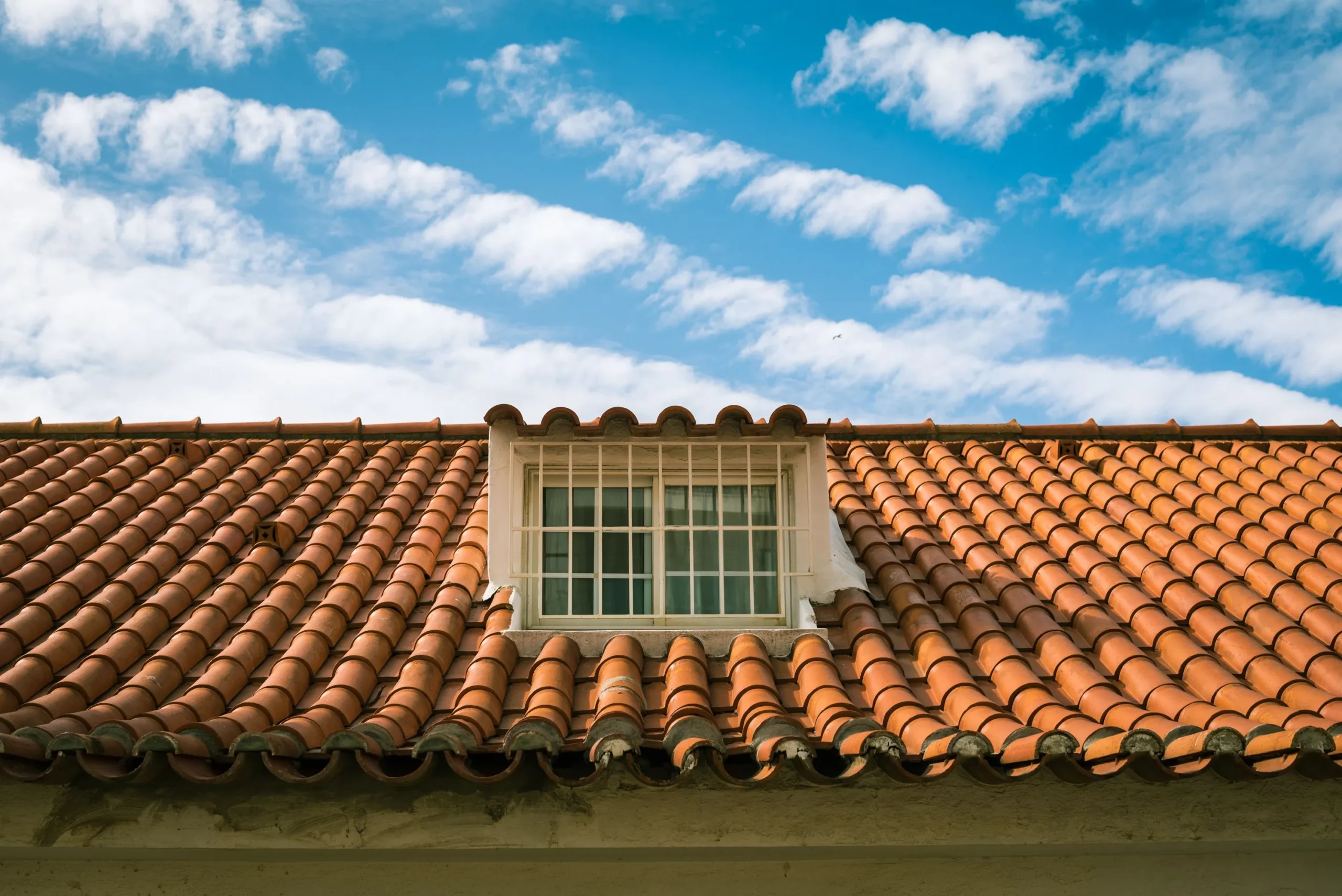
- Flashing sealant cracks. The caulk and sealant at chimney bases, skylights, dormers, and pipe boot collars survives temperature cycling for so long before it separates. When it separates, water doesn’t flood in — it seeps in slowly, travels along a rafter or decking board, and shows up as a ceiling stain 10 feet from the actual entry point.
- Ridge cap lifts. The adhesive strips on ridge cap shingles lose bond in repeated heat cycling. Once a ridge cap shingle lifts even slightly at the tail, wind-driven rain gets underneath and travels down the ridge seam.
- Valleys corrode or clog. Valley flashing that’s been exposed to 20-plus years of rust and UV corrosion starts to fail at seams. On pre-2000 homes where valleys weren’t sealed with ice-and-water shield underlayment, a failed valley causes multi-point water entry — homeowners see stains in two or three rooms and assume multiple separate leaks. It’s usually one valley.
Not sure if your roof is showing these signs? See our full signs you need a roof replacement guide or how long asphalt shingle roofs last in Texas heat.
Neighborhood Risk Guide
The risk isn’t uniform across Conroe. Build era matters:
- East of I-45 / Downtown core — 1970s–early 1990s · Highest risk
- Willis & north Montgomery County — 1980s–1990s · At or past lifespan
- Spring Branch Rd / Longmire corridor — 1990s–2000s · Prime risk window now
- River Plantation — 1990s–2010s · Steeper pitches, higher repair cost
- Grand Central Park / Artavia — 2015+ · Lower risk, verify install quality
- Lake Conroe waterfront — Mixed age · Elevated humidity & algae year-round
Pine Trees — The Conroe Roof Problem Nobody Talks About
Conroe sits at the western edge of the East Texas Pineywoods. Loblolly pine is the dominant tree species on wooded lots throughout the area, especially north and east of downtown, along the Sam Houston National Forest boundary, and on older residential lots near the lake.
Loblolly pines don’t shed on a seasonal schedule. They drop needles continuously. A home with pine overhang over the roof accumulates needle debris in valleys and gutters year-round, and that debris causes three specific problems:
Valley Dams
Pine needles pack into roof valleys and form a debris dam. During heavy Conroe rain, water backs up behind the dam and overtops the valley flashing, wicking under shingles in both directions. This is the mechanism behind most “I don’t know where it’s coming from” calls.
Moisture Retention
A mat of wet pine needles holds water against shingles for two to three days after rain stops. That persistent moisture accelerates granule adhesion failure and feeds algae colonies on north-facing slopes and shaded sections.
Acidic Decomposition
Decomposing pine needles produce mild organic acids that break down the asphalt binder in shingles faster than normal weathering. On a roof with consistent pine needle coverage, granule loss in the accumulation zones outpaces the open sections of the same roof.
Standard gutter guards don’t stop pine needles. Needles are thin enough to weave through mesh screens and pack into downspouts. If you have pine trees within 30 feet of your roofline, you need gutter cleaning at least three times a year, not the standard twice. Consider upgraded gutter protection designed to handle needle-heavy debris loads.
Pipe Boots — The Most Common Single-Point Leak Source in Montgomery County
A pipe boot is the rubber or lead collar that seals the plumbing vent pipe where it penetrates through the roof. Every home has at least two or three. Standard rubber pipe boots fail in 15–20 years under normal conditions. In Conroe’s UV and heat environment, they often fail at 12–15 years.
This is the most common call we get from homes built in the 1990s and early 2000s: a slow stain appearing near the ceiling of a bathroom or utility room that gets slightly worse after each rain. Homeowners usually blame the drain line or a window seal. Almost every time, it’s a pipe boot.
The reason this matters beyond just fixing the leak: insurance carriers classify a cracked pipe boot as maintenance failure, not storm damage. That means no coverage regardless of what storm just passed through. The distinction between a pipe boot that cracked from UV exposure and one that was impacted by hail matters — but you need documentation from within 48–72 hours of a confirmed storm event to support the latter argument. Call the roofer before you call the insurance company.
You can check your pipe boots from the ground or a ladder at the eave. Each plumbing vent stack that penetrates through the roof has a rubber collar at its base. If that collar looks cracked, checked, or pulled away from the pipe, schedule a replacement before the next rain. A pipe boot swap runs $250–$450. What it turns into if you wait — soft decking, wet insulation, mold — costs significantly more.
Flashing Fails First, Leaks Show Up Later
If pipe boots are the most common single-point failure, flashing is the most common category of failure overall. Chimney base flashing, skylight perimeters, dormer walls where a vertical surface meets a sloped roof, and valley intersections all depend on metal flashing and sealant working together. In Conroe’s climate, that combination faces a temperature swing of more than 50°F between January lows and August highs. Metal expands and contracts. Sealant fatigues. The joint opens — slowly.
Most flashing leaks don’t flood a room. They seep. Water enters at a separated chimney counter-flashing, runs down the inside of the brick chase, and shows up as a water stain on a wall two floors below the actual entry point. Homeowners spend time looking for the wrong problem.
Flashing repair is the most overlooked maintenance item on a Conroe roof. A chimney flashing repair runs $500–$1,500 depending on complexity. A valley re-flash runs $800–$2,500. Neither is a large expense compared to what happens to a decking board that stays wet for three months. Our roof repair team handles all flashing work, and our annual maintenance checklist covers exactly what to inspect and when.
The Attic Ventilation Factor
Conroe’s February average humidity is 80%. Warm, moist air rises into attic space and condenses on the underside of roof decking during cooler periods. Repeated moisture cycling softens decking from below — same result as a slow leak, different source entirely. Once decking softens, nails pull loose at the fastener points. Loose nails mean shingle lift. Lifted shingles admit wind-driven rain.
This pattern is common in homes where soffit vents got blocked by insulation during an attic upgrade, or where ridge ventilation was never installed properly to begin with. It looks like storm damage from inside. The adjuster disagrees. The issue is ventilation, and no insurance policy covers that.
Check from inside the attic: any dark staining on rafters without a visible penetration in the decking above it is condensation damage. Pinpoints of daylight through the boards are penetrations — not necessarily active leaks, but vulnerabilities. If you’ve never been in your attic, that’s worth changing.
If your Conroe home was built before 2010 and you haven’t had a roof inspection in the last two years, you’re operating on assumptions. Most of the failures described above are invisible from the ground until they’ve already caused interior damage.
Call Conroe Roofing & Restoration: (936) 259-5454 Free roof inspection. Montgomery County. Licensed & insured.Storm Damage vs. Maintenance Failure — What Insurance Actually Covers
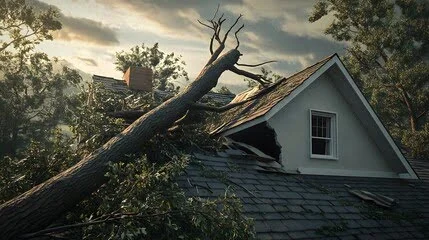
Texas HO-3 policies cover sudden, accidental events: hail, wind, fallen trees, lightning. They don’t cover gradual deterioration, UV-degraded pipe boots, algae damage, or improper original installation. The line between the two categories is where most Conroe roof claims get complicated.
A few things every homeowner here should know:
Wind & Hail Deductibles Are Percentage-Based
- On a $450,000 Conroe home, a 2% wind and hail deductible means $9,000 out of pocket before insurance pays anything — separate from your all-other-perils deductible.
- Know your number before you file. It changes the math on whether filing makes financial sense.
The Cosmetic Damage Exclusion Is Spreading
- Carriers are quietly adding this language to Texas policy renewals.
- Under it, hail bruising that degrades shingles without causing an immediate active leak can be denied.
- Check your current declarations page before assuming you’re covered after a hail event.
ACV vs. RCV Matters on an Older Roof
- Actual cash value (ACV) policies depreciate the roof by age — an 18-year-old roof that costs $14,000 to replace might get a $4,000 payout.
- Replacement cost value (RCV) policies pay the full replacement cost minus your deductible.
- Pull your declarations page and look for depreciation language on the roof line.
Document Before You Call the Carrier
- Get an inspection report with photos and time stamps before calling insurance.
- Adjusters evaluate what they can see when they arrive — a roofer on-site during the walk-through produces more complete claim scopes.
- Weather service confirmation of the storm event dates your documentation correctly.
Texas HB 2102 Makes Deductible Waivers Illegal
- Any contractor who offers to “work for the insurance check only” or absorb your deductible is committing insurance fraud.
- After every major Montgomery County storm, storm chasers make this pitch door to door.
- Verify any contractor’s Texas roofing license at license.tdlr.texas.gov before signing anything.
For a full breakdown of the storm and hail damage process in Conroe, including how we document damage and work with adjusters, visit our storm damage page.
What to Do If You Think Your Conroe Roof Is Leaking
- If it’s raining right now: Go into the attic with a flashlight. Find the wet spot. Trace it back toward the roof surface — water almost never enters directly above where it shows up on the ceiling. Take photos of what you find.
- After rain stops: Check gutters for granule accumulation. Walk the roofline from the ground and look for lifted ridge caps, missing shingles, obvious flashing separation at chimneys. Don’t get on the roof yourself after a storm.
- Call a licensed roofer before calling insurance. Get a written inspection report with photos before the carrier sends an adjuster. This is the single most effective thing you can do to protect a valid claim. See our guide on how to check for roof storm damage and what to do next.
- Don’t wait. Wet decking in Conroe’s humidity starts to soften within weeks. Mold establishes in 24–48 hours. A $400 repair today has a track record of becoming a $5,000 job by spring.
If you’re weighing your options, our roof repair vs. replacement guide walks through exactly when each makes sense for a Conroe home.
Roof Leak Repair Costs in Montgomery County
| Repair Type | Typical Range |
|---|---|
| Pipe boot replacement (per boot) | $250–$450 |
| Flashing repair — chimney or dormer | $500–$1,500 |
| Valley re-flashing | $800–$2,500 |
| Partial shingle repair | $1,500–$6,000 |
| Emergency tarp (storm protection) | $300–$800 |
| Full replacement — standard asphalt | $9,500–$20,000 |
| Full replacement after severe hail | $12,000–$35,000 |
Any quote given before a roofer has physically inspected your roof and confirmed the scope is a guess. Get it in writing after an on-site inspection. Use our roofing calculator for a planning estimate based on your home’s details.
Conroe Roofing & Restoration serves Conroe, Montgomery, The Woodlands, Spring, Magnolia, and Tomball. If you’ve read this and recognized your roof in any of it, the inspection is free — no obligation, written report included.
Schedule Your Free Inspection: (936) 259-5454 Licensed & insured. Storm damage documentation. Montgomery County roofing specialists.Frequently Asked Questions
Minor flashing separations, small cracks in pipe boots, and valley debris dams all have a threshold. Light rain doesn’t generate enough volume or pressure to overtop or penetrate the gap — heavy sustained rain does. The fact that it only leaks in heavy rain doesn’t mean the problem is small. It means you’ve identified exactly where the failure is under load.
Pipe boot failure, followed by flashing separation at chimney bases and valley intersections. On homes from that era, all three are likely in various stages of failure simultaneously. A single-point repair without inspecting the rest is a short-term fix on a system with multiple aging components.
Yes, through valley clogging, persistent moisture retention, and accelerated granule degradation from acidic decomposition. If you have loblolly pine overhang anywhere near a roof valley or gutter line, that’s a maintenance problem that will eventually become a leak problem. Regular gutter cleaning is the primary mitigation — at minimum three times per year on pine-heavy lots.
Waterfront and near-water properties see faster algae growth on north-facing slopes and shaded sections, accelerated sealant degradation from sustained elevated humidity, and wind exposure from the lake that other neighborhoods don’t face. The material degradation rate is higher, which means inspection intervals should be shorter — every two years instead of every three.
The key question is cause. If the failure started with a covered weather event — hail, wind, fallen tree — and you can document the storm event and the resulting damage with a timeline, it’s likely covered. If the failure is UV-degraded rubber, corroded flashing, or granule loss from age, it’s maintenance and it’s not covered. Most Conroe leaks involve both — storm damage on a roof that was already aging. The quality of your documentation determines which category the carrier applies. See our storm damage roofing page for the full claims process.
It’s the rubber collar around the plumbing vent pipe that sticks up through your roof. From the ground, you can usually see them as short vertical pipes extending above the roof surface, each with a dark rubber collar at the base where it meets the shingles. If the collar looks cracked, crumbled, or pulled away from the pipe, it needs replacement. If you can’t see them clearly from the ground, a roofing contractor can check them during a free inspection.
Depends on the rest of the roof’s condition, not just the leak. If the leak is isolated, the shingles still have reasonable granule coverage, and there’s no evidence of widespread flashing failure or decking softness, a targeted repair buys meaningful time. If the rest of the roof shows granule loss, multiple flashing failures, and there’s been a significant hail event in the past two years, a repair is putting new material on a system that’s going to keep producing problems. A good inspection tells you which situation you’re in. Our repair vs. replacement guide covers the decision in detail.
Document the storm event — date, time, zip code confirmation from weather service data. Then call a roofer before calling your carrier. Get a written inspection report with photographs of every impact point. When the adjuster arrives, have your roofer on-site for the same appointment. That one step produces more accurate claim scopes than any other part of the process. Our storm damage check guide walks through every step.
Texas licenses roofing contractors through the Texas Department of Licensing and Regulation (TDLR). You can verify a contractor’s license at license.tdlr.texas.gov. Any legitimate contractor working in Montgomery County should be able to provide their license number before you sign anything.
Water enters and travels — along rafters, through insulation, down wall cavities. In Conroe’s heat and humidity, wet decking softens within a few weeks. Mold grows within 24–48 hours of sustained moisture. What starts as a small stain at a cracked pipe boot routinely becomes a project involving decking replacement, insulation removal, and mold remediation when it’s left alone through a wet season. The leak doesn’t stabilize on its own. See our roof leak after storm guide for the full damage progression and what to do at each stage.